“I’d just be the catcher in the rye and all. I know it’s crazy, but that’s the only thing I’d really like to be. I know it’s crazy.” -J. D. Salinger
Welcome back:) I can’t believe I’m almost done with this novel. Today I’m reviewing chapters 19-23, and Thursday I’ll review the rest of the novel. Sunday I’ll be moving on the “The Perks of Being a Wallflower,” so stick around!
One of the main themes in this section, and the whole novel in general, is sexuality. On page 158, the topic of “flits” comes up. “Flit” was the term for homosexuals at the time, and it wasn’t something that was talked about very often. However, Holden’s friend Luce knew who all the flits were (or he made it up and everyone believed him), so they talked about it a good bit. It was a pretty immature thing to do. When Holden tried to bond with Luce by pointing out a “flit,” Luce blows it off and asks Holden when he’s going to grow up. Holden moves on to ask Luce about his sex life and tries to get some advice on his. He also calls Luce out on the way he treats girls. Holden continuously mentions how his sex life sucks, but us readers know that he doesn’t really want one. I think this is all just an attempt to bond with Luce, even though he knows he will leave. Luce’s only advice to Holden is to be psychoanalyzed, which hints toward the fact that Holden is writing from and asylum.
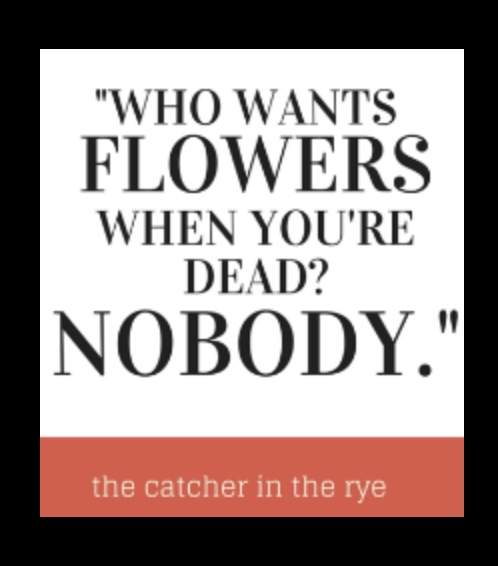
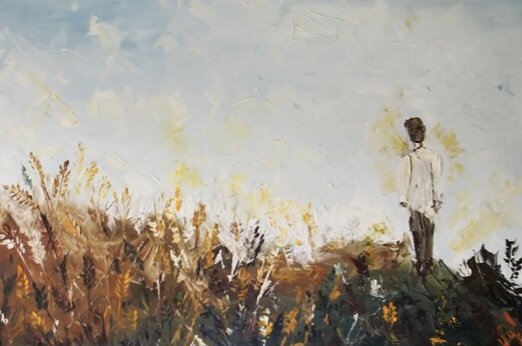
Loneliness and depression are both still common in the novel. On page 165, Holden actually admits that he’s lonely to Luce, which is the first time he’s admitted it to anyone. When Holden leaves the bar, he is drunk-crying, but he blames it on being depressed and lonesome. The reason Holden got drunk in the first place is because he was lonely, so it makes sense. On page 171, Holden looks for the ducks, which, as I mentioned before, represent the people in his life who have left him. Holden is truly looking for a companion– someone he loves. Holden also feels guilt for missing Allie’s funeral, which leads to thoughts of death in general, which usually stems from depression. When Phoebe is upset with Holden for flunking out of school, he feels ostracized, which reminds him about when he was ostracized by then fencing team just a couple of days before. Later, when Phoebe is calling Holden out on his state of not liking anything, he begins to feel deeply depressed again. I think it’s because he realizes she’s right. I really do believe that Holden’s loneliness stems from the fact that he isn’t maturing as quickly as the people around him, and that makes him feel left out, leading to depression. Holden also doesn’t want to grow up, but he knows he has to, which also influences his depression. Holden is stuck at a crossroads between community and innocence.
The biggest theme in the novel is that of maturity verses innocence. The lake freezing over is a huge representation of that. This can be viewed in to different ways. On one hand, the lake is half frozen and half not frozen. This represents Holden’s transition from innocence to maturity. Holden knows the lake will eventually fully freeze over, just like he knows one day he will have to face reality and grow up. The the other hand, the lake freezing over parallels the way that Holden wants to pull a Peter Pan and freeze time. He doesn’t want anything to change. Holes later tells Phoebe that he wants to be a “catcher in the rye.” In other words, he wants to save innocents from adulthood. He wants to keep them from falling off a cliff that they can’t climb back up. He explains how he’s the only big person on the cliff, which shows that he both grew up and doesn’t fit in. He wants to stop children from making the mistake that he made– he wants them to be able to stay young forever. The final symbol is when Holden gives Phoebe his hunting hat. He knows he can’t hide anymore. Maybe he’s finally realizing that it’s time to grow up.
That’s all I’ve got for today. Stick around for more lit information. (And the end of the novel on Thursday!) talk to you later:)


